 Gas Safe Registered
Smart Thermostat Great Yarmouth


Smart thermostat installation across Great Yarmouth, Gorleston, Caister and the surrounding coast, by Gas Safe registered engineers. Google Nest, Hive and tado. Great Yarmouth is where we are based — and holiday lets and B&Bs are where a remote heating control genuinely earns its keep.
Registered Engineers
Response
Service Available
Wide Coverage
Boiler Point installs smart thermostats across Great Yarmouth, Gorleston, Caister and the surrounding NR30 and NR31 postcodes. A smart thermostat lets you control the heating from your phone, run a real schedule, heat rooms separately and see what the system is actually doing. We fit the mainstream, well-supported systems — Google Nest, Hive and tado among them. All work is carried out by Gas Safe registered engineers. Call 01493 295 064.
Great Yarmouth is our home town. We are based here, we work here every day, and we know the housing — the Victorian terraces in the Rows and Southtown, the seafront guest houses, the Gorleston semis, and the enormous number of properties in this town that someone owns but nobody lives in.
Holiday Lets, B&Bs and Guest Houses: Heating a Property You Are Not In
Great Yarmouth, Gorleston, Caister and Hemsby run on a holiday economy. Self-catering cottages, seafront guest houses, B&Bs, static caravans and park accommodation — a huge amount of the housing stock on this coast is occupied by someone other than its owner, on dates set by a booking calendar.
Heating a property like that with a wall thermostat and a hope is a bad system. Either you leave it running and pay for warmth nobody is enjoying, or you leave it off and your guests arrive on a wet Friday in October to a cold house and a one-star review.
Remote control solves a genuine problem here, and it is not a gimmick. This is the single strongest case for a smart thermostat we see anywhere on our patch.
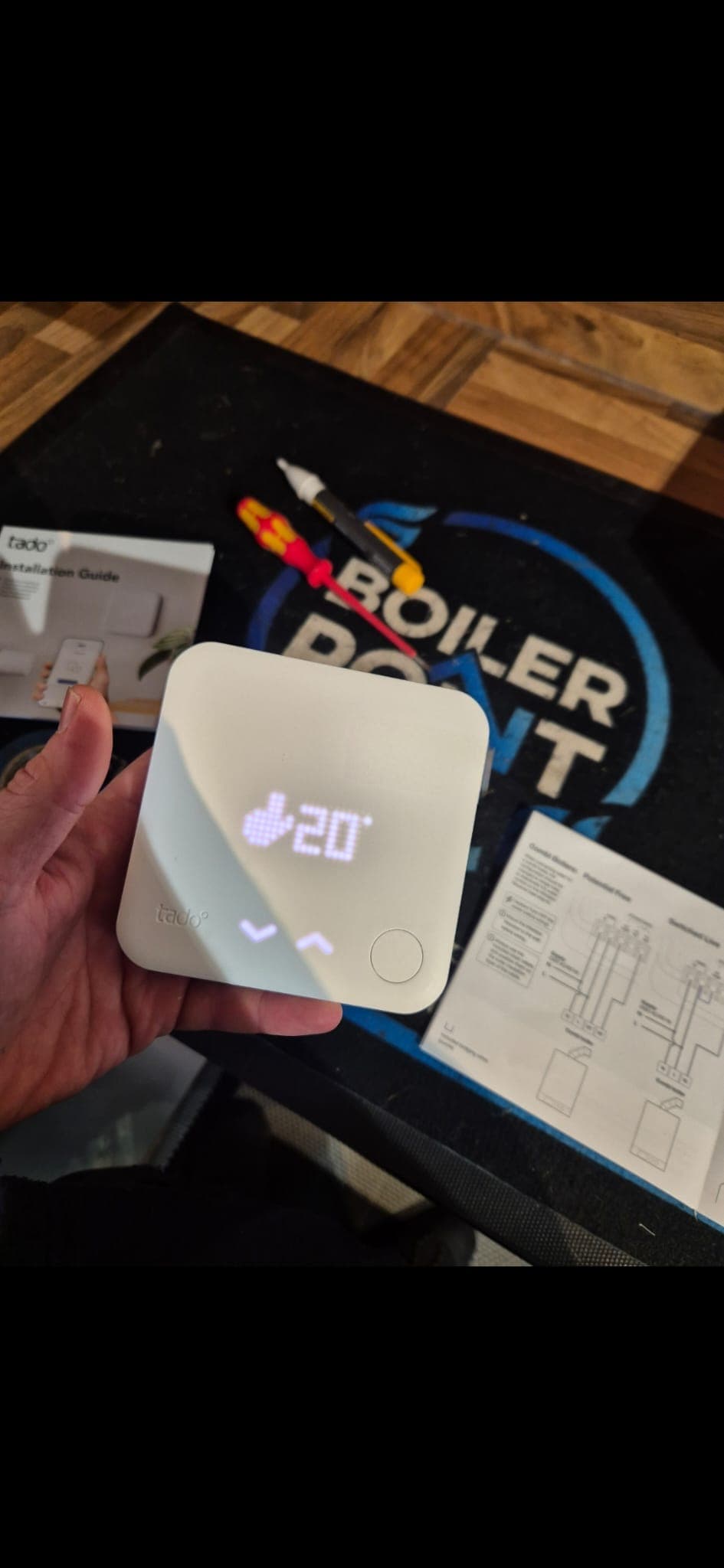
Bring the heating on from your phone a few hours before guests arrive, so the house is warm when they walk in — without heating it for the two days it was empty beforehand.
An empty let does not need to be at 20°C. It does need to be above freezing. Frost protection holds a low set point so the pipes are safe and you are not paying to heat an empty house through the shoulder season.
If the boiler fails in an empty cottage in January, the app shows you the temperature falling and the heating not responding. Without it, you find out on the next visit — or when something has already burst.
Set an upper limit or lock the schedule, so guests can be comfortable but cannot leave the heating flat out with the windows open for a week.
If you run more than one let along the coast, using the same system in all of them means one app, one login, one place to check them all before a cold snap.
One caveat worth saying out loud: all of this depends on the property having a reliable internet connection. If the broadband at the let is unreliable, sort that out first — the thermostat will still hold its schedule without Wi-Fi, but you lose exactly the remote features you bought it for.
Smart Thermostat Installation, Start to Finish
Our engineers fitting and commissioning a smart heating control
Coastal Properties: What the Sea Does to a Heating System
The thermostat itself lives indoors and does not care about the weather. But if you own a property on this coast, there are two things worth knowing, because they shape what we recommend.
Flue terminals, external pipework and condensate pipes take a beating on the seafront and in the exposed properties across NR30 and NR31. Nothing to do with the controls — but it is why a coastal property benefits from a proper annual service more than an inland one, and why we look at the outside of the boiler as well as the inside.
Solid walls, single heating zone, a thermostat in a draughty hall. The boiler runs to satisfy the coldest, worst-placed room in the house. Smart radiator valves let you set rooms independently without chasing new cable through original plaster — which is normally the right answer in these houses.
A lot of property here sits unused from October to Easter. That is exactly when frost damage happens and exactly when nobody is watching. Remote monitoring is worth more in a seasonal town than in a town where every house is lived in year-round.

Replacing the Old Wall Thermostat
Most of the properties we upgrade around Great Yarmouth are still running a basic dial or a 1990s programmer — one temperature, one zone, and a schedule nobody has changed since it was fitted.
The upgrade is usually straightforward. Where it is not — an old wiring centre, no cable where you want the thermostat, a hot water cylinder circuit to bring in — we find that out at the assessment, not halfway through the job.
What It Will Actually Save You
The Energy Saving Trust estimates that smart heating controls can cut heating bills by up to 10-20%. That is an upper figure, and it is worth being clear about where it comes from.
A smart thermostat does not make your boiler burn gas more efficiently. It saves money by stopping you heating rooms and hours you did not need to heat. So the saving tracks the waste:
- Biggest gains: a holiday let or guest house that is heated when empty, a large house run as one zone, or a property where nobody is watching the schedule.
- Smaller gains: a compact, well-insulated home where someone already sets a sensible programme and sticks to it.
If the honest answer for your property is that the payback is slow, we will tell you. We would rather do that than sell you something you did not need.
What the Installation Involves
Assessment
We look at the boiler, the wiring centre and the existing thermostat, and confirm what the property will take. On a let property we will also ask about the broadband, because the remote features depend on it.
Choosing the system
Nest, Hive, tado or another mainstream control, matched to the system — single zone or multi-zone, heating only or heating plus hot water, wired or wireless. If you run several lets, we will usually suggest standardising on one.
Isolation and removal
Power safely isolated, and the old thermostat and controls disconnected.
Wiring and integration
The new control and its receiver are wired in, with any adapters or rewiring the property needs. In the older seaside terraces this is usually the longest part of the job.
Commissioning and testing
Power restored, heating and hot water tested end to end, and the app paired to the property Wi-Fi.
Setup and handover
We set the schedule up with you and show you the app. For a holiday let, we can hand it over already configured for changeover heating and frost protection between bookings.
A straight swap for an existing wired thermostat is typically 45 to 90 minutes. A touchscreen model, a hot water channel, or a system needing new wiring is usually 2 to 3 hours. Zoning a whole property with smart radiator valves takes longer.
Smart Heating Controls: What You Get
Remote control, scheduling, zoning and frost protection, explained
Where We Install Smart Thermostats Around Great Yarmouth
Great Yarmouth town
NR30 — seafront, town centre, Southtown, the Rows
Gorleston-on-Sea
NR31 — Gorleston, Magdalen, Cliff Park
Bradwell & Belton
NR31 — Bradwell, Belton, Burgh Castle, Hopton
The coastal villages
Caister-on-Sea, Hemsby, Scratby, California
Broads-side villages
Ormesby, Martham, Filby, Rollesby
Great Yarmouth is our base, so this is the area we cover most closely — NR30 and NR31, out to Caister, Hemsby, Ormesby and Martham. If you own several holiday lets in the town, they can usually be fitted across the same visit or the same run of days — and the quiet season is the sensible time to do it.
Book a Smart Thermostat Installation in Great Yarmouth
Tell us the property — a seafront guest house, a Gorleston let, a Caister cottage that stands empty half the year, or simply your own home — and we will tell you what will actually work in it and what it will do for you. Book online or call 01493 295 064.
Great Yarmouth Smart Thermostats
Best Suited To
• Holiday lets and self-catering cottages
• B&Bs and seafront guest houses
• Properties empty through the off season
• Owners managing several lets at once
• Large or single-zone family homes
Key Features
Other Services Locally
Run a Holiday Let?
Tell us how many properties you manage and how they are heated, and we will tell you which system gives you one app for the lot — and whether it pays for itself.
Call: 01493 295 064
Smart Thermostats in Great Yarmouth: Common Questions
Ready to Get Started?
Contact us today for a free, no-obligation quote. Our Gas Safe registered engineers are ready to help.
Serving Great Yarmouth, Norwich, Lowestoft, and all of Norfolk